Late April at the Sandy Hook north beach, a humpback breaches a hundred yards offshore. Someone on the observation deck lowers their binoculars and says, quietly, there it is again. The whales have been here longer than the lighthouse, longer than the fort, longer than the idea that this peninsula needed defending. They follow the same northbound current every spring — Ambrose Channel to the Narrows, then up past the city — trailing bunker and purpose.
The nineteenth-century whalers out of New Bedford and Sag Harbor knew these waters. So did the Lenape, who understood the routes before anyone drew a chart. What changed is that we stopped hunting and started watching. The New York Bight is quieter now in some ways, and the whales come closer. In 2016, a forty-foot humpback surfaced off the Twin Lights, close enough that people on the bluff could see the barnacles on its rostrum. The news called it rare. The mariners called it Tuesday.
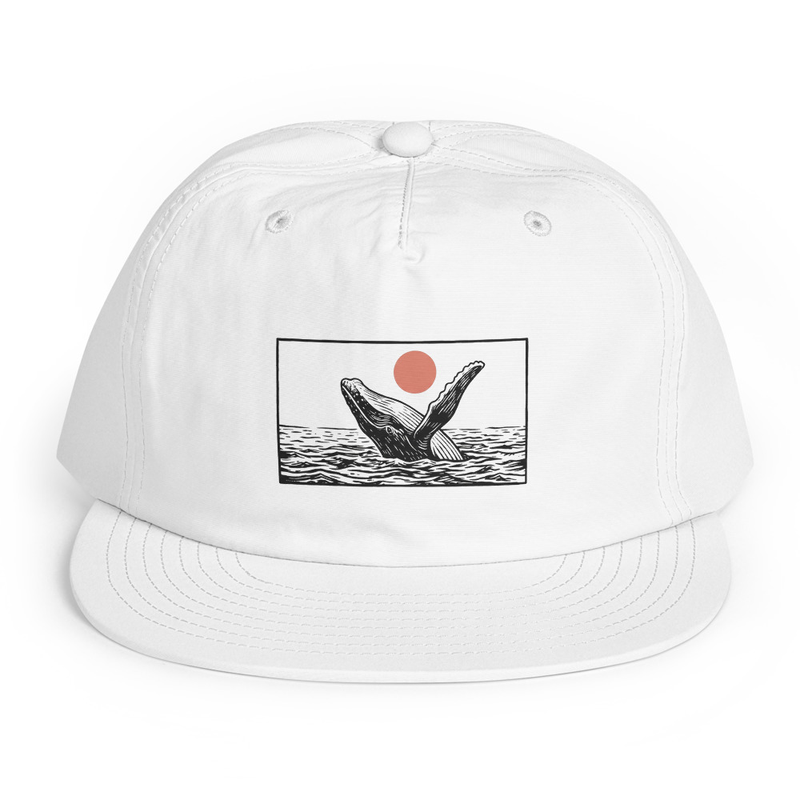
A breaching humpback rendered in hand-cut linework, framed by a copper sun and blue water. Low-profile cotton twill, unstructured, made to soften in salt air and long afternoons on the Hook. The embroidery sits flat and spare — nothing extra, nothing explained.
Wear it to the bay. Wear it on the ferry. Wear it when you see the spout and you don't need to say a word.