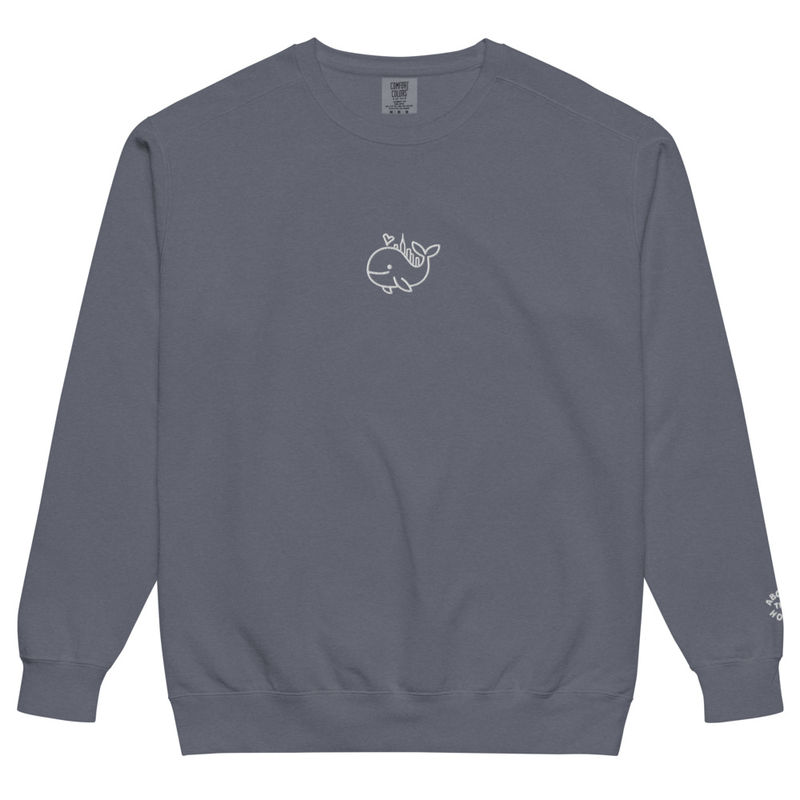
The humpbacks arrive off Sandy Hook in late April, following the menhaden north through the Narrows. From the bluff at Highlands you can sometimes see them breach — a dark arc against the container ships and the skyline beyond. They pass close enough that the Coast Guard issues advisories. Recreational boats give wide berth. The whales are working.
This coast has always been a feeding ground. In 1668, colonial surveyors noted "greate whales" off the peninsula, close enough to the beach that carcasses would wash ashore after storms. By the 1840s, Highlands fishermen launched small boats to chase them with hand harpoons — not the deep-sea industry of New Bedford, just opportunistic work when the schools came near. The last documented shore-whaling from Sandy Hook was in 1918. Now they return unmolested, part of a slow recovery that feels fragile and earned.
The embroidered mark here is a single-line gesture — stylized, not scientific, almost like something scratched into driftwood. A shorthand for the animal and the ritual of watching for it. Heavyweight fleece in three colors that fade like the water does depending on the light.
Worn on a cold morning at the Hook or twenty blocks inland, it says the same thing: you know what moves through these waters.