On the bluff above the Shrewsbury River, where the borough's streets dead-end at chain-link and salt grass, there's a bench that faces the harbor. Early mornings in October, the light comes low and copper across the Narrows. Container ships slide south toward Ambrose Channel. The bench has a brass plaque — someone's father, someone's uncle — but the rain has worn the dates smooth. Highlands sits 266 feet above sea level, the highest elevation on the Atlantic seaboard between Maine and the Yucatán. That matters when you're watching weather roll in.
The town has always been a lookout. Before the Twin Lights went up in 1862, there were signal fires on this ridge. Before that, the Lenape knew it as a place to see what was coming — storm, ship, season. By the 1920s, Highlands was a steamboat resort. By the 1950s, a fishing village. By the 1980s, a bedroom community for people who worked the docks or the refineries or didn't work at all. After Sandy in 2012, it became a town that rebuilt itself quietly, without much outside help.
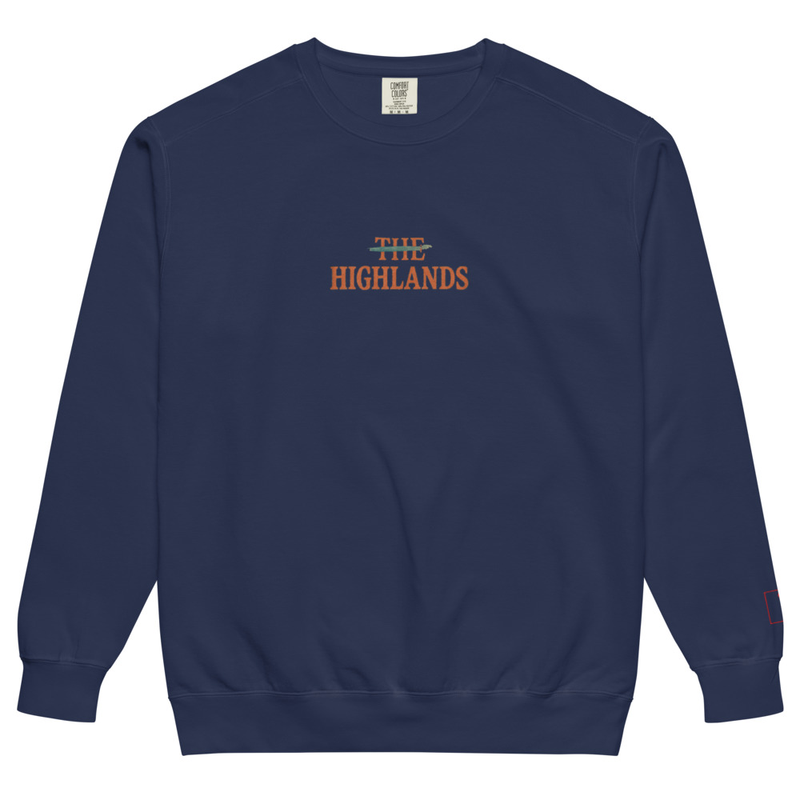
This crewneck carries the name in two weights: struck through and redrawn. It's a nod to the layered history of a place that's been written over but never erased. Heavy cotton, ribbed cuffs, a fit that doesn't apologize. It's what you pull on when the wind picks up and you're not done watching the water yet.