The striped bass follows the bait through the Narrows in late April, running the deep channels past Sandy Hook and into the Shrewsbury River where the shad and bunker spawn. Surfcasters wait at dawn along the Hook's ocean beaches. Charter boats idle outside the Ambrose Channel, watching the birds. The run is reliable — the fish are not. Some seasons they come in steady. Others they ghost through and keep north.
Morone saxatilis has been here longer than the lighthouse. Indigenous fishermen knew the timing before any tide chart was printed. Commercial netters worked the bays until the stocks collapsed in the 1980s. The recovery took decades. Now there are slot limits, catch-and-release seasons, arguments in the tackle shops about whether the population is rebuilding fast enough. The bass doesn't care. It moves when the water tells it to.
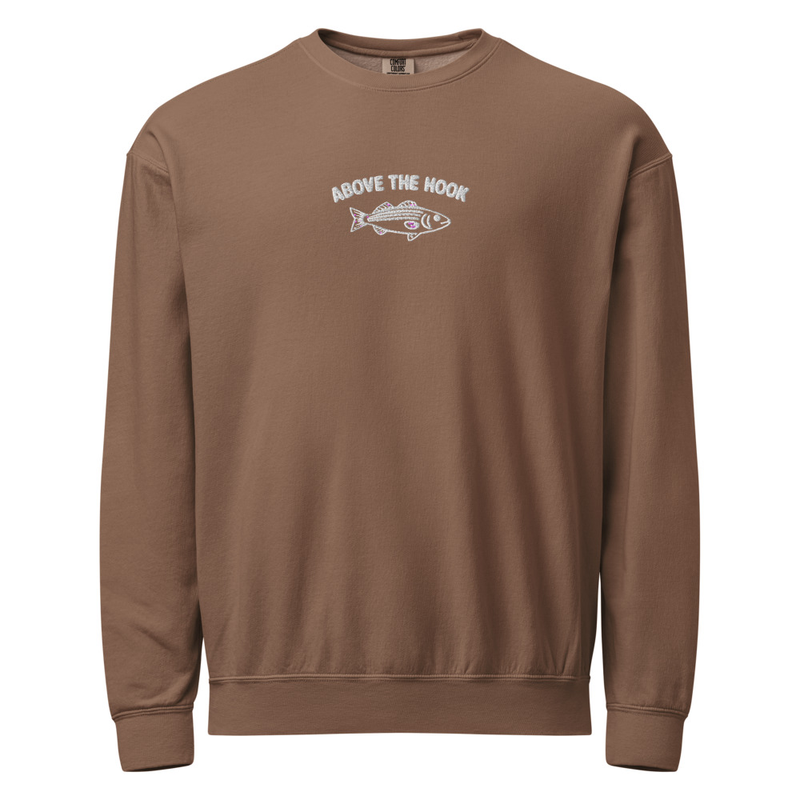
This crew carries the outline of the fish and the name of the peninsula. The fabric is light enough for May mornings on the bluff, heavy enough for October evenings on the beach. Not gear, not a costume. A sign you know what swims under the surface here.
Espresso for the boat, Blue Jean for the inlet, Butter for anyone tired of navy.