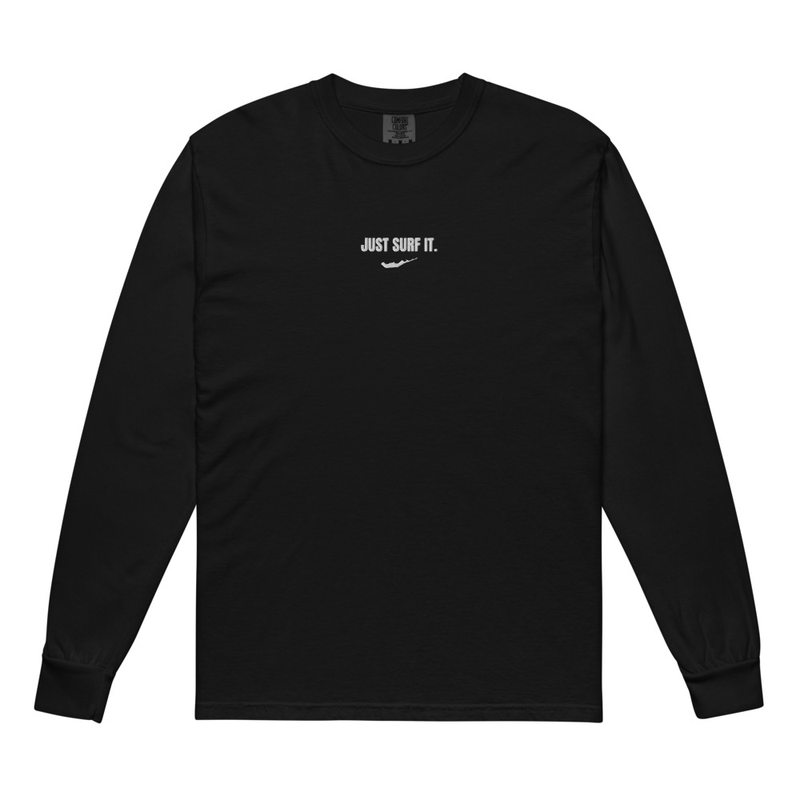
The offshore wind has switched. November dawn, forty-two degrees, and the ocean off Sandy Hook is glassy enough to see the swell lines stacking before they break. Someone paddles out from lot D with a longboard under one arm and a thermos wedged in the sand behind them. No wetsuit debate, no crowd report, no checking three apps to confirm what the water already knows.
The phrase borrows from somewhere else, but the imperative fits here. New Jersey has been a surf coast since long before anyone thought to brand it — before the jetties went in after the 1962 storm, before the Sea Bright seawall, before the Asbury Park renaissance rewrote the narrative. The waves have always been here. So have the people willing to get cold for them. Spring nor'easters, September hurricane swell, the random January groundswell that catches everyone off guard. The water doesn't care about optics.
This one's cut for the shoulder season and the in-between days when you need a layer that works wet or dry. Small chest print, clean lines, nothing that announces itself louder than it needs to. The kind of thing you pull on in the parking lot after a session or wear to the bait shop on a Sunday morning when the rest of the coast is still asleep.
The Hook doesn't ask permission. Neither should you.