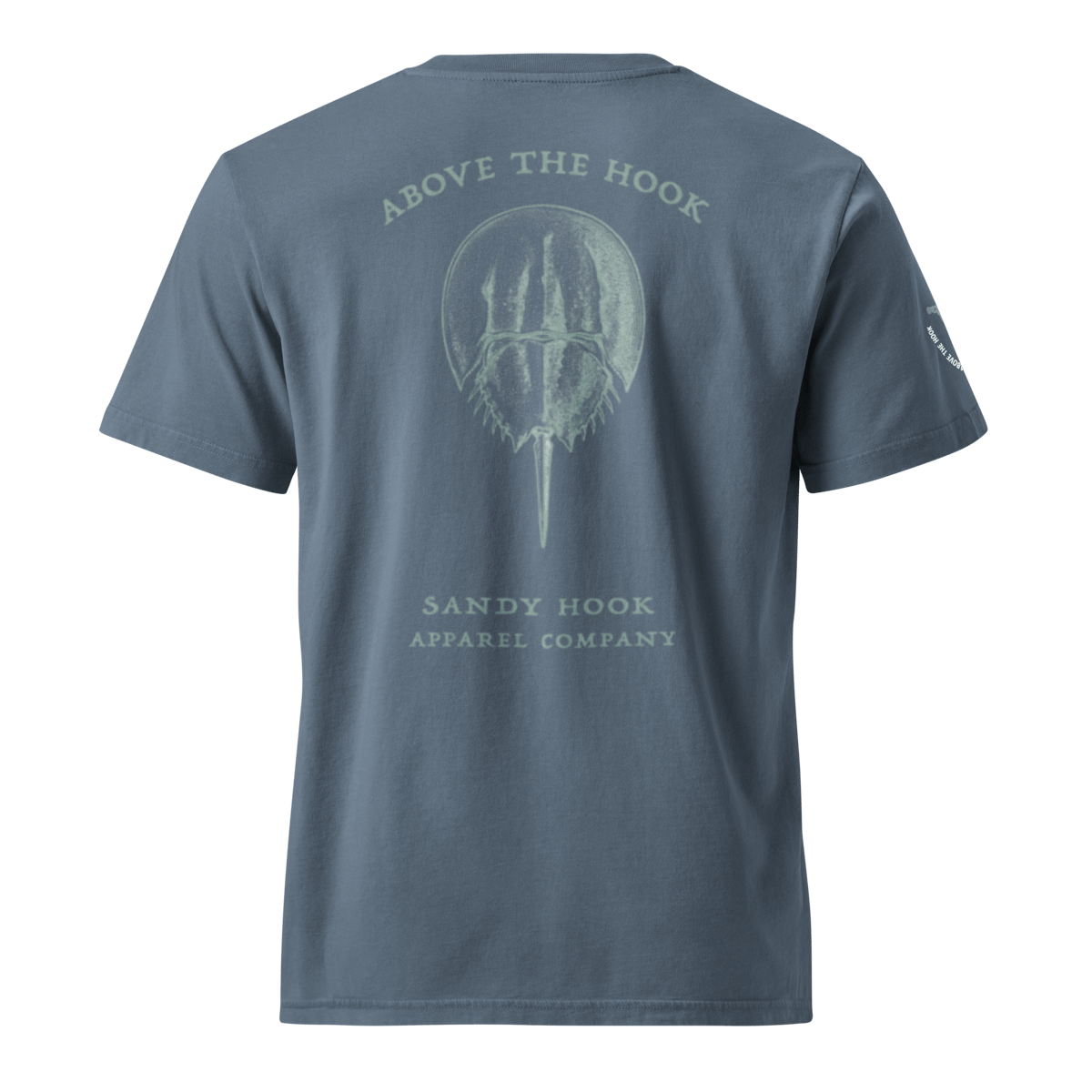
Late May, early June — the horseshoe crabs come ashore at Sandy Hook by the thousands. Full moon, high tide, the leading edge of night. They ride the swells onto the bayside beaches to spawn in the wet sand, a ritual unchanged for 450 million years. Older than the dinosaurs. Older than the trees. You can stand at the wrack line under the glow of the Twin Lights and watch the tide write its annual contract with deep time.
Limulus polyphemus. Not a crab at all — closer kin to spiders and scorpions. Ten eyes scattered across a helmet-shaped carapace, blue blood that's saved countless human lives through medical research, a tail spine that looks menacing but does nothing. They crawl over one another in the shallows, awkward and patient, built to outlast catastrophe. Five mass extinctions. The rise and fall of civilizations along this same shoreline. The crabs return regardless.
This coast knows them well. The Lenape harvested them for fertilizer long before Europeans arrived. Fishermen still use them for eel and conch bait, though the populations have thinned. Biomedical companies extract their blood for bacterial testing. Shorebirds — red knots flying from the tip of South America — time their stopover to feast on the eggs buried in the sand.
The graphic here is small, placed over the heart. Garment-dyed cotton that's been through enough to feel like it's already yours. A thing you'd wear to the beach at dusk to see if the crabs have started their march, or to the diner afterward with sand still on your boots. A marker for those who know what it means to live in a place where the old world still shows up on schedule.