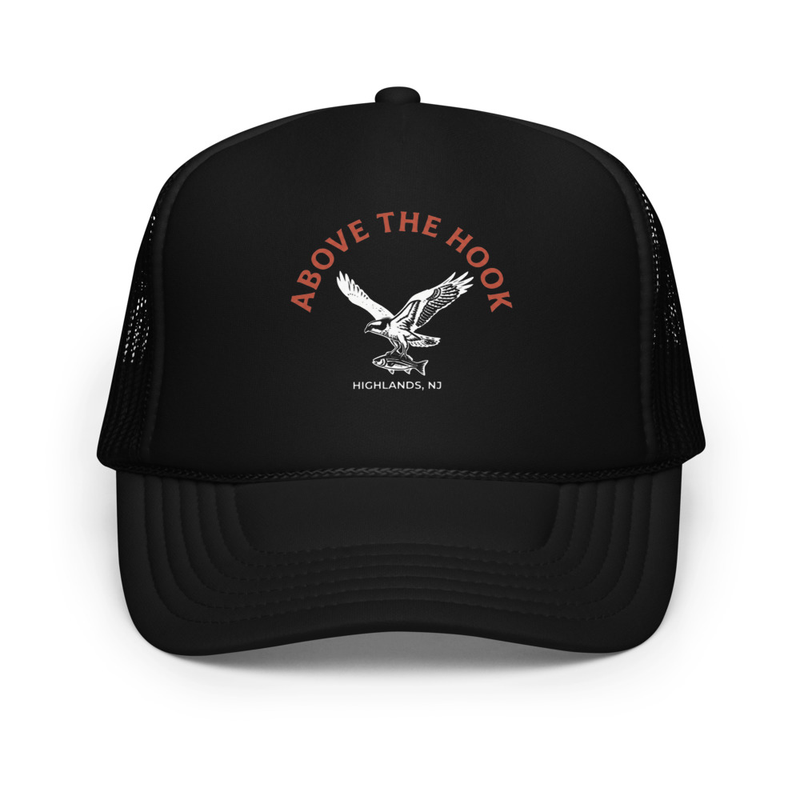
Late afternoon, low tide, and the ospreys are working. They circle above the Shrewsbury River flats, wings tilted into the westerly, then fold and drop. Sometimes they miss. Sometimes they rise with a bunker flashing silver in their talons, heading back to the nest platform on the channel marker. Dinner time.
The osprey returned to the Hook in numbers after DDT was banned in 1972. Before that, eggshells thinned to nothing and the population collapsed. Now they're everywhere again — stacked up on navigation towers, cell phone poles, the old Nike radar mounts at Fort Hancock. They hunt the shallows at the edge of the bay, where the Navesink meets the sea, where the water is brackish and full of life. A coastal raptor, built for this exact margin.
The foam front keeps the crown dry and structured. The mesh back breathes. The osprey emblem is lifted from a 19th-century maritime engraving — wings spread, talons forward, the moment before contact. It's rendered in two colors, simple and sharp, the kind of mark that reads clean from across a dock or a parking lot.
This is a hat for people who know what the ospreys mean here. That they came back. That the river is still worth watching. That some afternoons, if you're paying attention, the light and the birds and the tides all line up, and you remember why you live on this specific coast.